

Travel + Living

A New Era of Conscious Travel: Why Amboseli National Park Deserves to Be Explored

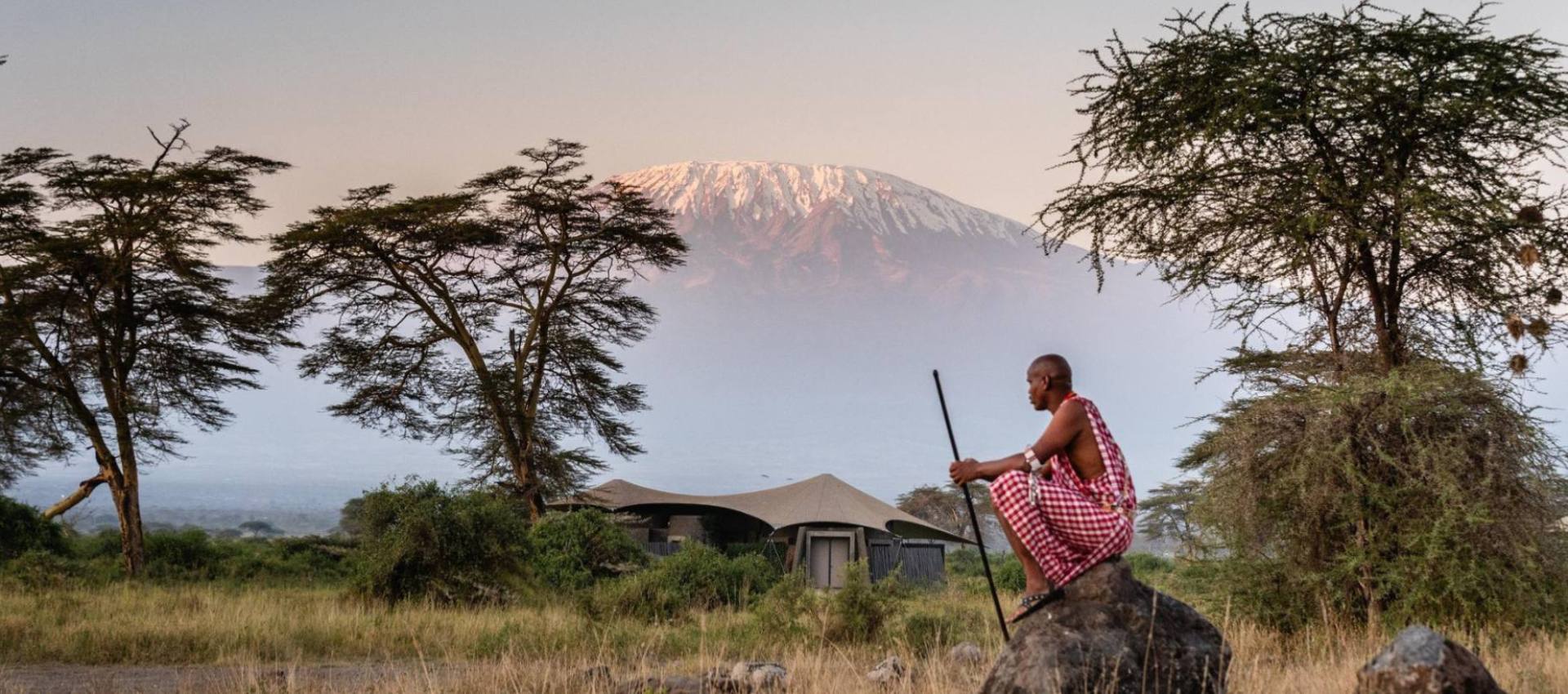
Set against the sweeping plains of Amboseli National Park, with the majestic presence of Mount Kilimanjaro rising in the distance, this iconic wilderness destination embodies a profound reverence for nature.
For decades, the rugged stretches of the Maasai Mara, with its rolling golden savannahs and dramatic river crossings, have shaped the world’s imagination of Kenya, a land where travellers arrive dreaming of the Big Five and the commanding presence of lions. Amboseli, by contrast, feels softer and more contemplative, defined by open plains and a powerful sense of scale.
On my way to Amboseli National Park, anticipation grew with every mile, until Mount Kilimanjaro quietly emerged through drifting clouds. In that moment, my heart skipped a beat. Beneath Africa’s highest peak, acacia-dotted plains and wandering elephant herds come together, creating a safari that feels timeless, emotional, and gently spiritual.
 

What Makes Amboseli Special?


I arrived in Amboseli National Park on the final stretch of my Kenyan journey, after days spent exploring the drama-rich plains of Maasai Mara, the gentle calm of Lake Naivasha, and the flamingo-brushed shores of Lake Nakuru. By then, wildlife encounters felt familiar.

I thought I had seen it all. I was wrong.

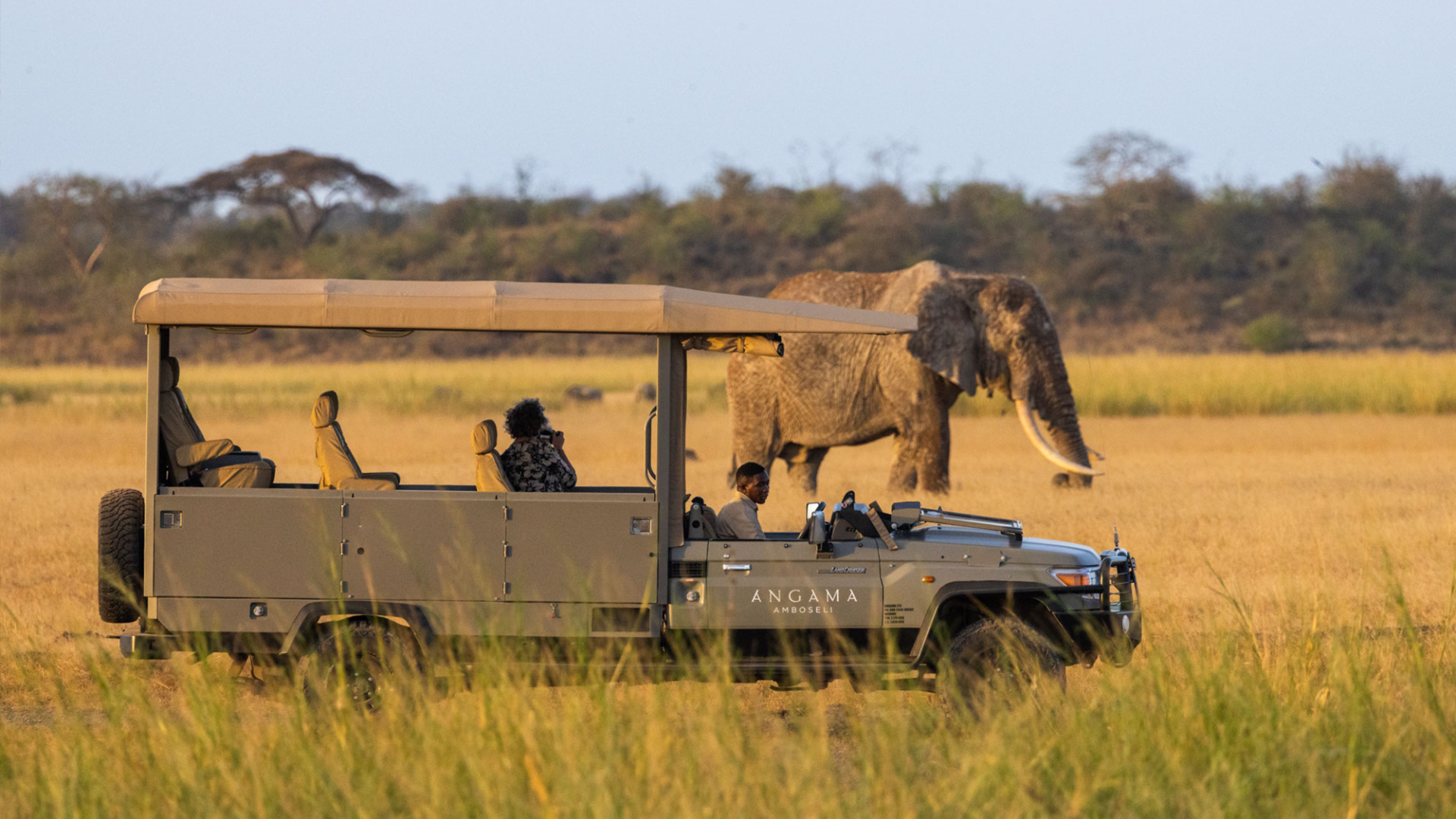
Exploring Amboseli felt different from the very first moment. There was a sense of scale and stillness that settled in gently. The land felt wider, quieter, more reflective. And then came the elephants. Not in passing glimpses or scattered sightings, but in vast herds, moving together with an unhurried grace that instinctively slowed my own pace. On an Amboseli game drive, there is no urgency, no chasing the next moment. The park asks you to pause, to look longer, to simply be present.

The landscape deepens this feeling. Dust-toned grasslands stretch endlessly, softened by acacia trees and seasonal swamps that draw wildlife close. Hovering above it all is Mount Kilimanjaro, its snow-covered peak slipping in and out of the clouds.

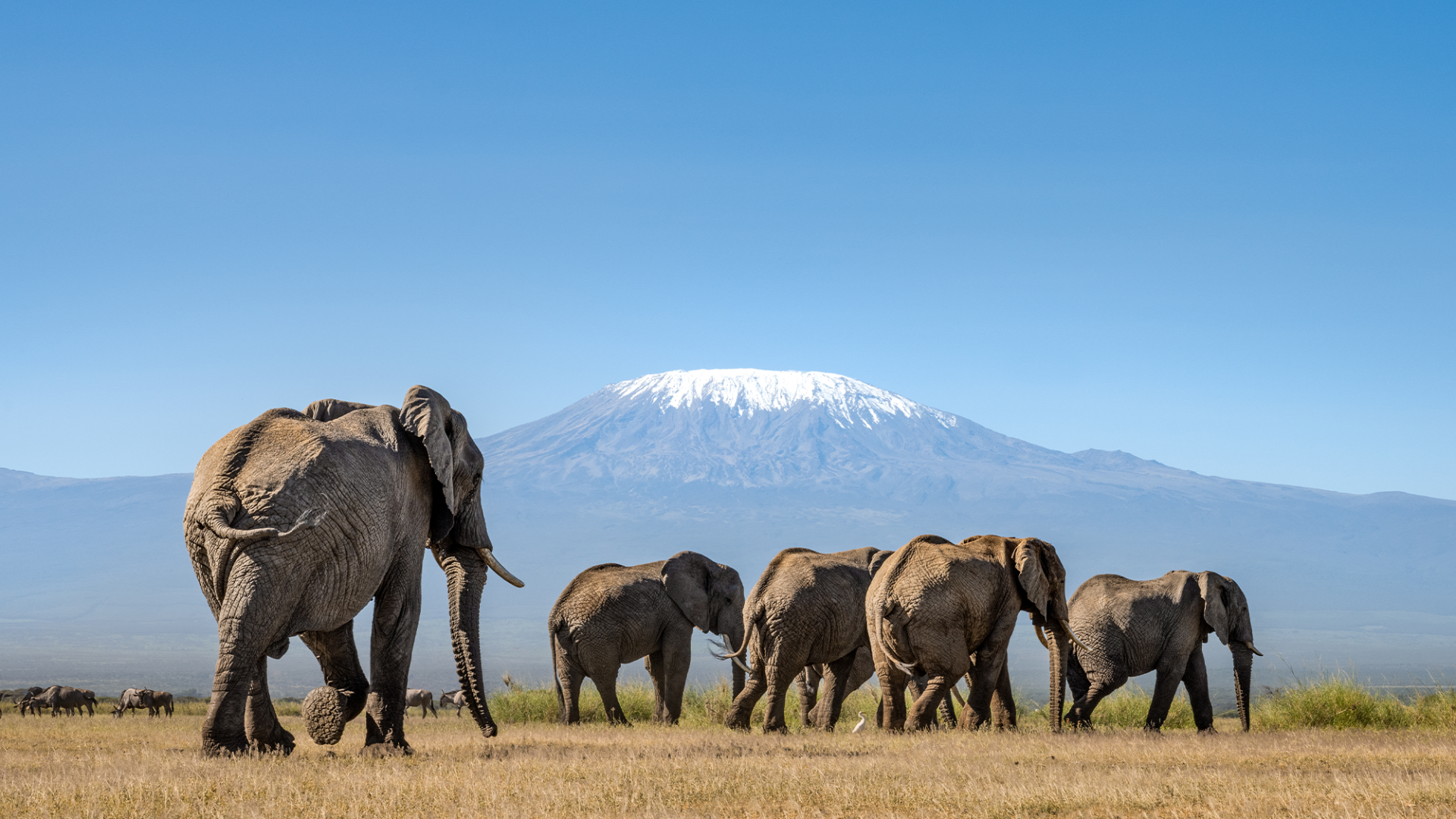
A safari in Amboseli would mean learning about elephant behaviour while seeking out resident herds. (Photo Credit: Sammy Njoroge)
Amboseli 2
The ground-floor ‘Agora’ brings together a restaurant, bar, deli, bakery, and speciality shops, celebrating Greek cuisine and local ingredients. (Photo Credits: ERGON House Athens)

A Surreal Game Drive Experience in Amboseli


Often called the land of the tuskers, Amboseli National Park carries the name with quiet confidence. Here, elephants move across the plains with tusks so long they seem to brush the earth, their presence humbling rather than performative. My game drives were never about spectacle. They were about closeness. About watching family units move as one, calves sheltered between elders, matriarchs leading with a calm authority that needed no sound. 


The walking safaris mirrored that rhythm. Set in the early mornings, they unfold slowly when the land feels newly awake, and the air still holds the cool breath of night. Every step sharpened my senses. I spotted several bird species, including the striking Secretary Bird with its bold black-and-white plumage. On one such morning, Mount Kilimanjaro revealed itself briefly through thinning clouds, and it was the most gorgeous sight I had ever witnessed. I had heard earlier that the mountain is most generous with its views during the drier months, especially in the early hours, and there I was, witnessing its majestic beauty.


Day-long game drives followed, surreal in their stillness. Wildlife appeared in its own time, and landscapes shifted almost imperceptibly. A line from Out of Africa stayed with me: “When you have caught the rhythm of Africa, you find out that it is the same in all her music.” In Amboseli, I finally understood what it meant.


Some of my warmest memories come from William, my walking safari guide. He is 33 and has spent every year waking up to Kilimanjaro. “I see it every day,” he said, “and I never get bored.” Walking beside him, listening to stories of the land, something shifted in me. African game drives, I realised, are not about chasing sightings. It is about slowing down, listening, and truly seeing.


Now, Luxury Meets Purpose in Amboseli


Amboseli is part of a vast, living ecosystem that stretches northeast toward the Chyulu Hills and Tsavo West National Park. At its heart lies Kimana Sanctuary, Kenya’s first community-owned conservancy, established in 1996. Spread across 5,700 acres and owned by 844 Maasai families, it forms a vital wildlife corridor linking larger wilderness areas. In some places, the corridor narrows to just 70 metres, yet some of the largest elephants left on the planet still pass through it. Protecting this fragile passage is the shared responsibility of the Big Life Foundation and the Sheldrick Wildlife Trust.


Within this landscape sits Angama Amboseli, an intimate lodge of just ten suites that feels inseparable from its surroundings. With uninterrupted views of Mount Kilimanjaro, it offers rare seclusion, while some of Africa’s last remaining Super Tuskers feed nearby.


The design quietly echoes Amboseli itself. Earthy tones reflect red ochre soil and fever tree forests, while sculptural curves nod to the elephant’s form. Even the dung-infused adobe walls speak of coexistence. With exclusive sanctuary access, private night drives, and unhurried moments of wellness, conscious travel here isn’t a concept, but it’s simply how life unfolds.

Amboseli 3
A safari in Amboseli would mean learning about elephant behaviour while seeking out resident herds. (Photo Credit: Sammy Njoroge)
Amboseli 4
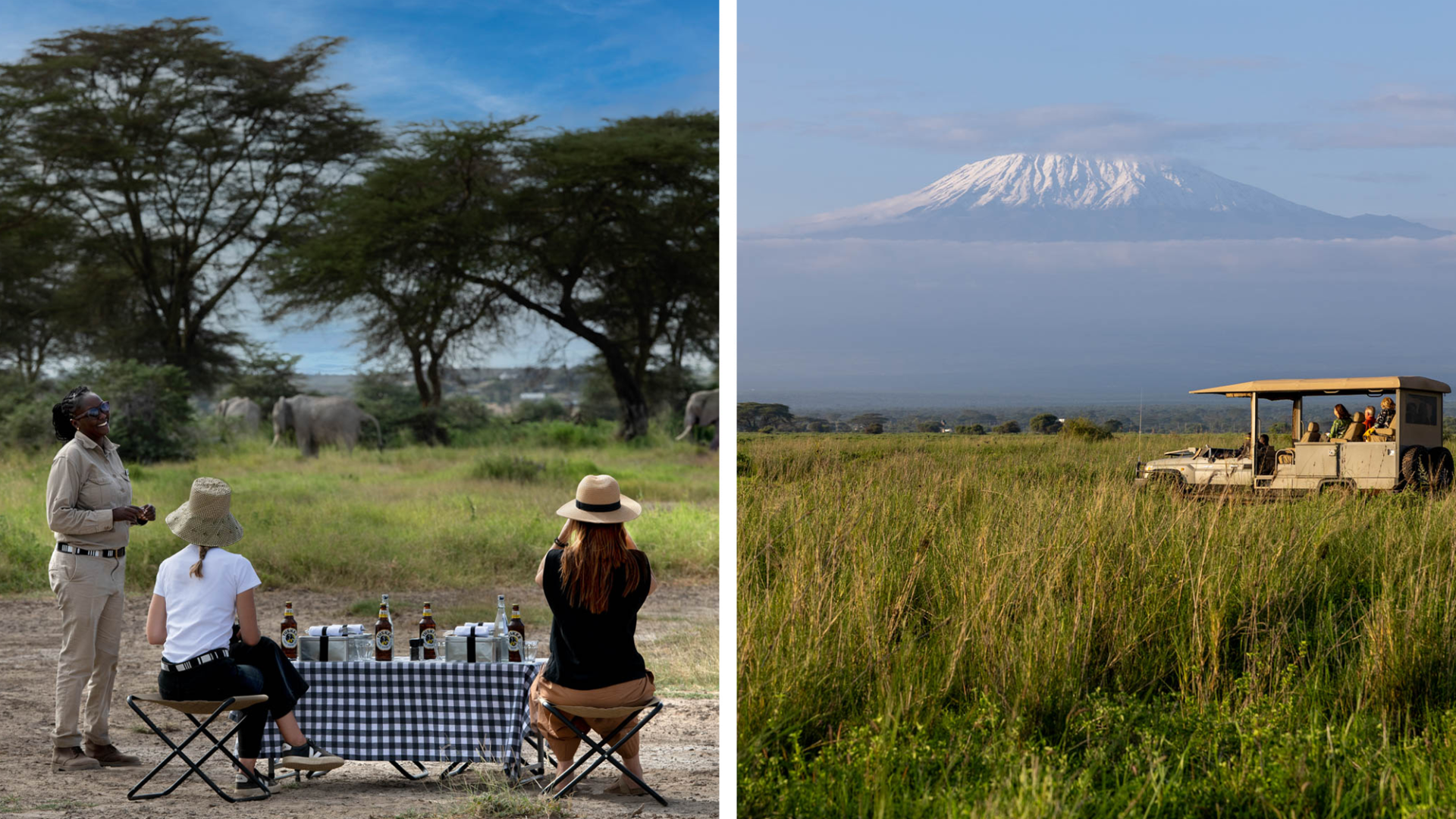
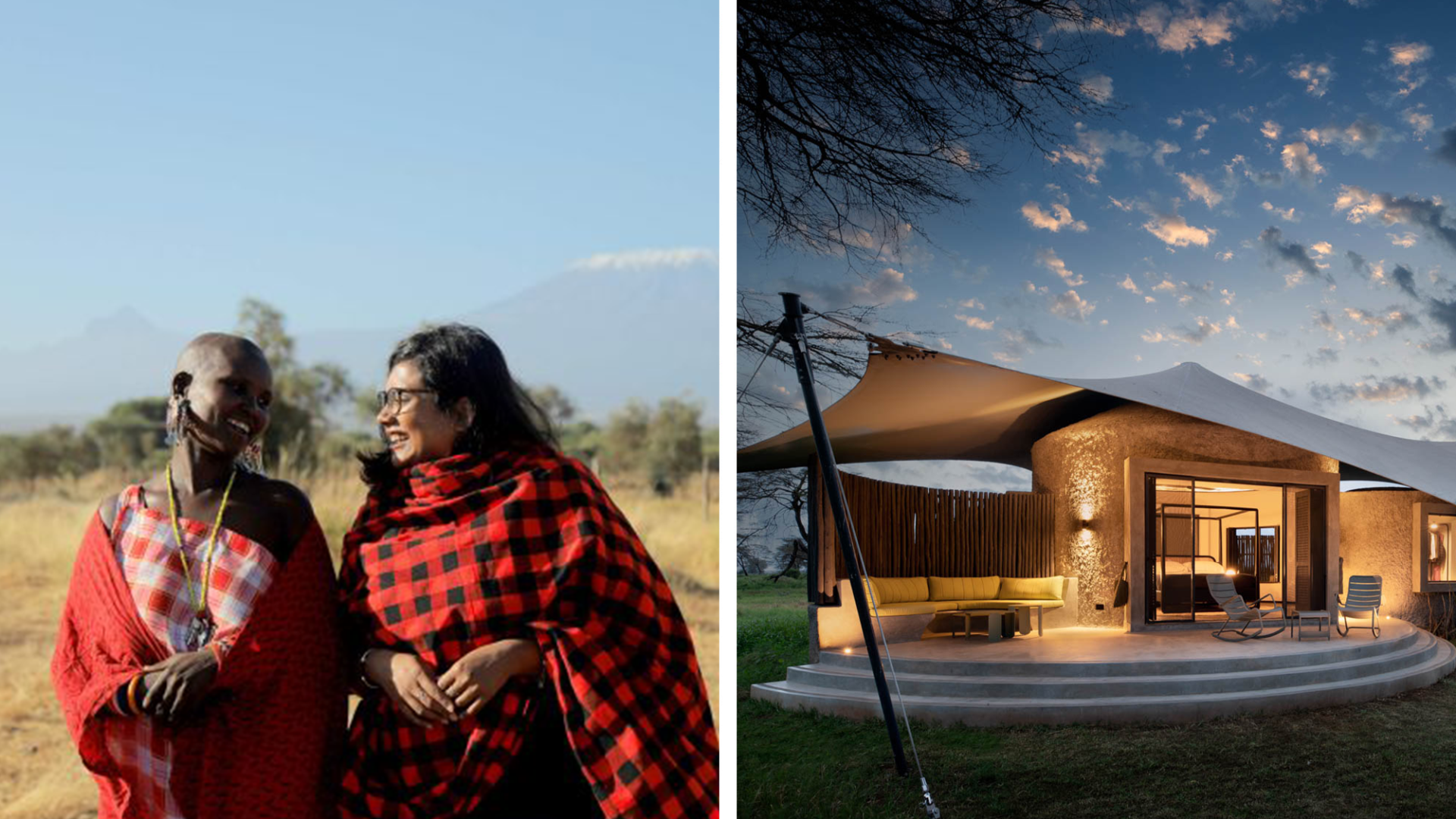
Left Image: Conversations with a Maasai lady, at Amboseli. (Photo Credit: Riyanka Roy) Right Image: Guest Suite (Photo Credit: Dook)
Amboseli 5
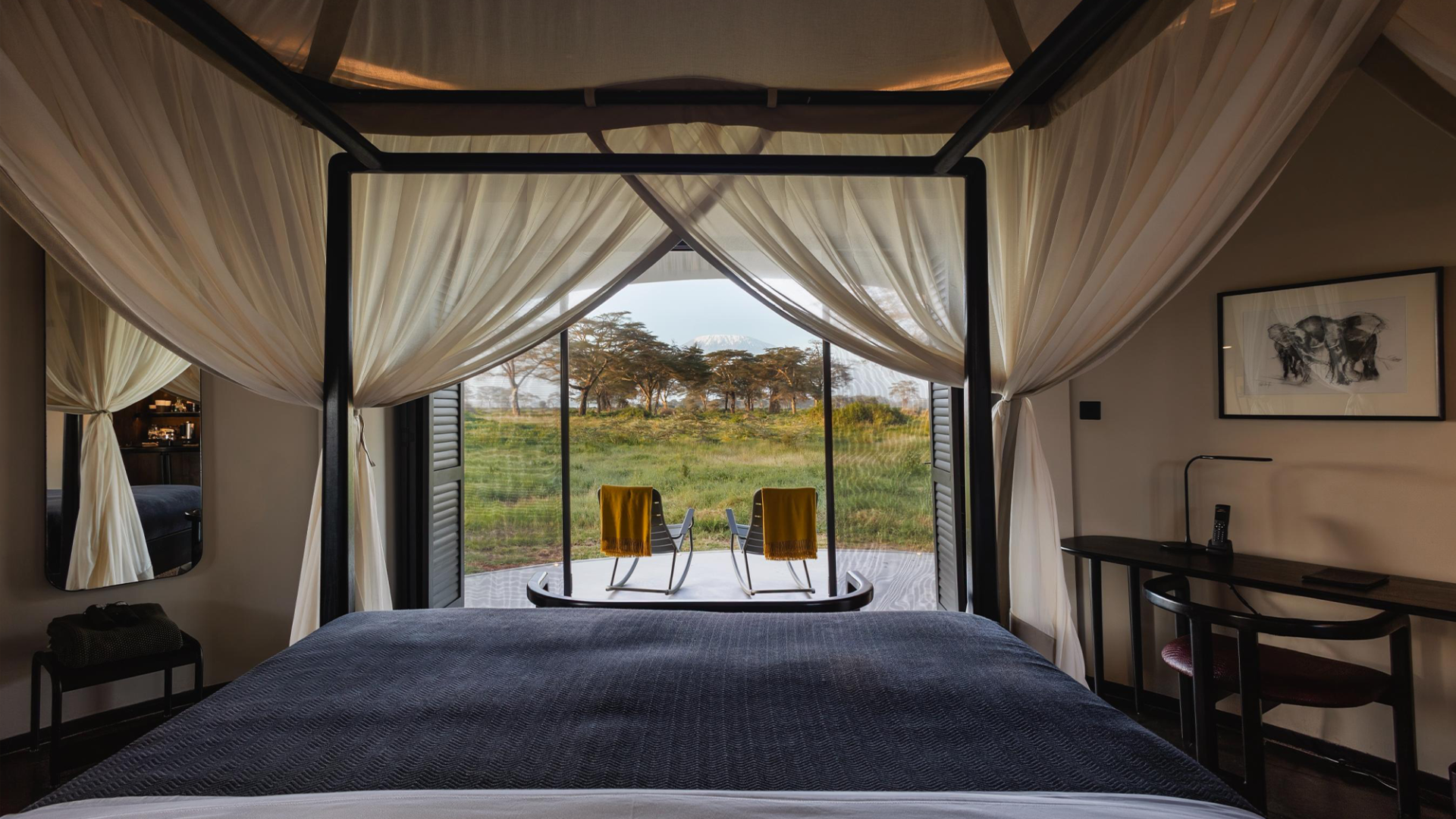
Every suite opens onto a grand panorama, with its outdoor patio the perfect setting to toast unforgettable days as Mount Kilimanjaro rises in the distance. (Photo Credit: Teagan Cunniffe)

Why Amboseli Truly Matters?


For us to understand why Amboseli National Park deserves a place on a conscious traveller’s itinerary, we have to look beyond romance and into reality. Covering roughly 392 square kilometres, Amboseli may be smaller than many of Kenya’s better-known parks, but its ecological importance far outweighs its size. It supports one of East Africa’s most significant elephant populations, with over 1,600 elephants moving through the greater ecosystem, many of which have been studied across generations.


Amboseli works not as an isolated park but as part of a living landscape. Wildlife moves freely between the park, neighbouring community conservancies, and open dispersal areas, following ancient routes that ignore human boundaries. This shared system is why Amboseli is often seen as a quiet model of conservation, where people and wildlife have learned to coexist.


Water is its unseen lifeline. Meltwater from Mount Kilimanjaro rises as swamps and springs, sustaining wildlife and drawing birds even through the harshest dry seasons.

For travellers, Amboseli offers a different kind of luxury. Fewer vehicles, deeper encounters, and community-rooted lodges create experiences that feel considered and calm. According to conservation data from the region, community conservancies around Amboseli provide livelihoods for thousands of people while protecting migration routes that would otherwise disappear.

Amboseli 6
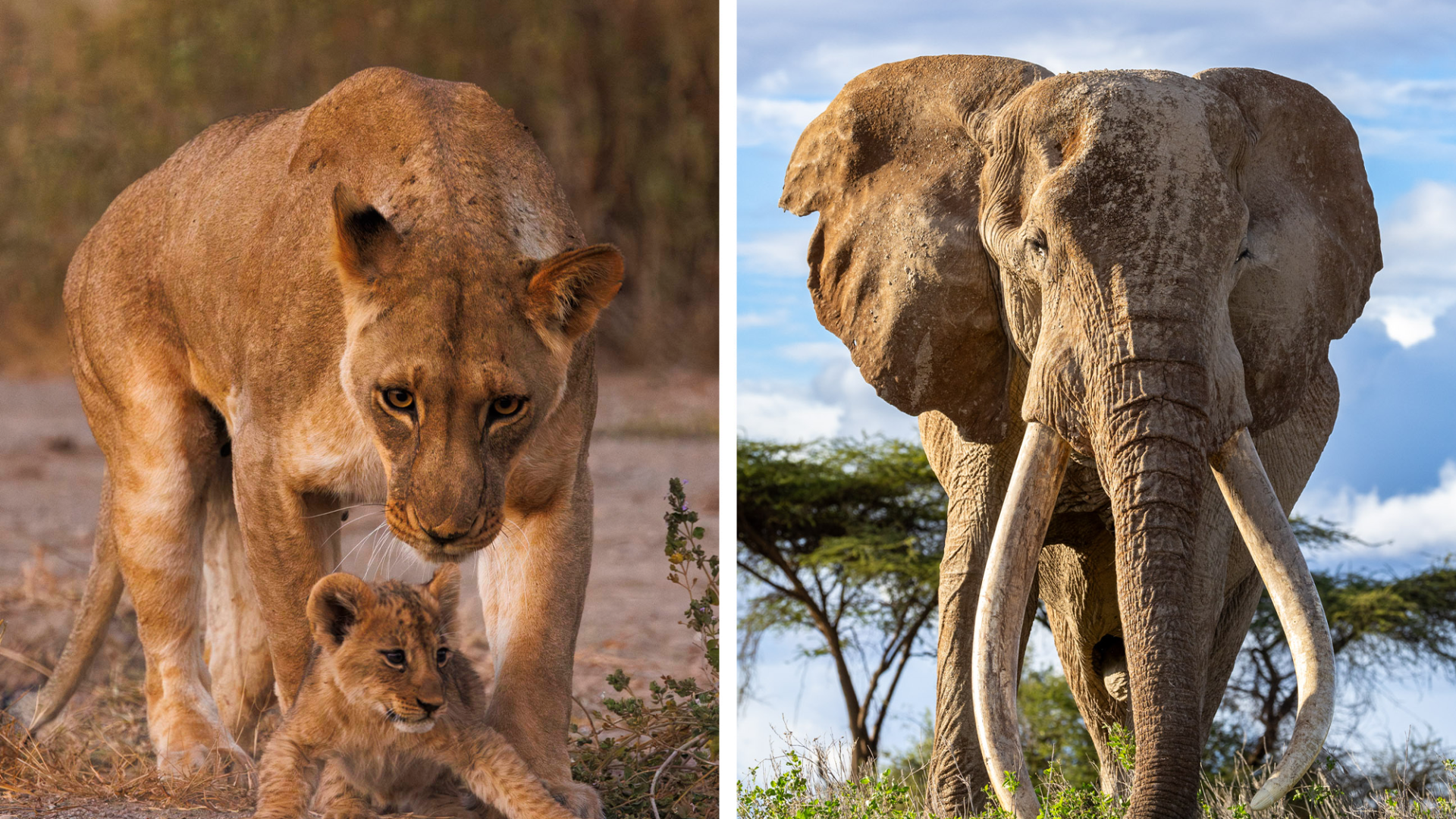
New cubs are a constant presence, but Craig, the largest super tusker who died of natural causes a few weeks ago, remains the undisputed icon of Amboseli. (L Image Credit: Japheth Supeyo, R Image Credit: Sammy Njoroge)

Final Thoughts


Amboseli should be explored because it sits at the intersection of beauty, science, and responsibility. It is a place where iconic imagery meets real-world conservation challenges, and where travellers can witness not just wildlife, but a working example of how tourism can support ecosystems rather than deplete them.


To explore Amboseli is to engage with the future of safari travel itself, one that values knowledge, restraint, and long-term impact over fleeting spectacle.


Getting There


The road journey from Nairobi to Amboseli National Park spans roughly 240 kilometres and takes about four to five hours, unfolding as a gentle transition from urban bustle to open savannah. As the city fades behind you, the drive winds through small towns and sun-washed countryside, gradually revealing wider skies and quieter roads, until the vast plains of Amboseli appear, crowned by the distant presence of Mount Kilimanjaro.

Words: Riyanka Roy // @iglink


Riyanka is a travel writer and photographer who has explored 32 countries (and counting).

From volunteering with remote communities in Africa to navigating bustling cities across Southeast Asia, she chases experiences over checklists. A slow traveller with a weakness for street food and budget flight hacks, she’s all about responsible tourism and real connections. If there’s a story to be found on the road, she’s already halfway there, with a camera in hand!

Newsletter-img

Stay updated with jhanvi community.

Subscribe now for exclusive event insights, the latest trends, weekly tips, and resources delivered directly to your inbox!

By subscribing, you agree to our Terms & Conditions.

NEWS LETTERS

WORK WITH US

LETTERS TO THE EDITOR